Where the fibre came from.
Everything you are wearing started as something growing in a field or standing on a hill. Find out where, then find out what it costs to bring it across a line on a map.
- How long
- About twenty minutes.
- You need
- Five things with labels in them · A pencil · Paper
- Messy
- No.
Step 1. Go and find five labels.
Inside the collar of a shirt. Inside the waistband of a pair of trousers. On the seam near the bottom of a t-shirt. In a coat pocket. Socks sometimes have one and sometimes do not.
Every one of them says Made in, and then somewhere. That somewhere is a real place where a real person sat at a machine and sewed the thing you are holding.
Step 2. Write the five countries down.
One under the other. If two labels say the same country, write it twice. It is worth seeing when a country turns up again.
Step 3. Put them in order, nearest to furthest.
Guess. You are not being marked and there is nothing to get wrong here. If you have a globe or a map, use it. If you do not, guess anyway and write your order down.
Hold on to that list. In a minute you are going to find out that the order you just made does not decide the thing everybody assumes it decides.
Step 4. Now look at ours.
Three cards under this list, one for each of the three places our own cloth starts. Read the fibre first. One of them is a plant, one of them is an animal, and one of them is a plant growing in a field you could drive to in a day.
Then look at the number in the corner of each card. That number is the tariff: what the United States charges to let the thing in.
Step 5. Do the sum.
Say a shirt costs thirty dollars to make. That thirty is not our price, because we do not have a price yet. It is a round number so the sum is easy.
One percent of thirty dollars is thirty cents. So nineteen point seven percent is thirty cents nineteen point seven times over, which is five dollars and ninety one cents.
Nearly six dollars, on a thirty dollar shirt, for crossing a line. Off the same shirt out of Peru or out of North Carolina, nothing at all.
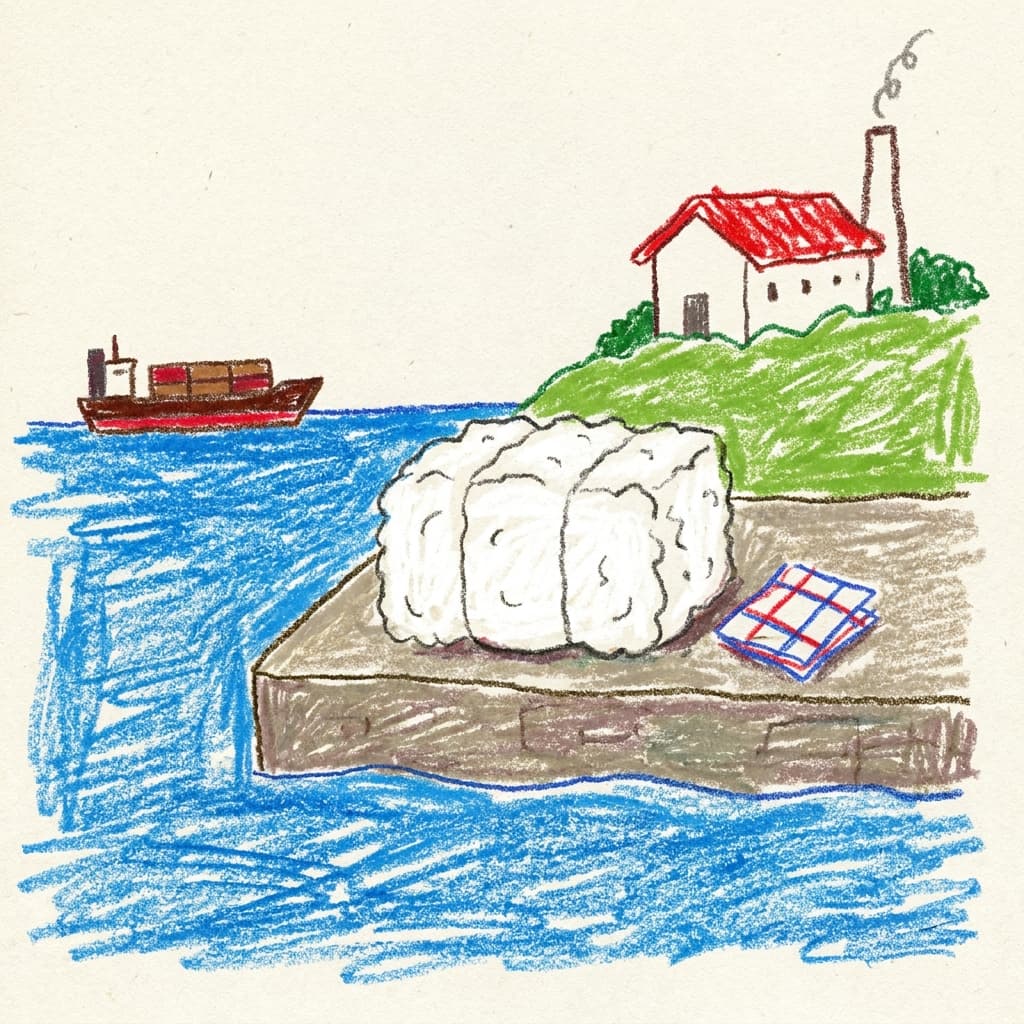
Drawn, not photographed. We have never been there.
Portugal
Povoa de Varzim and Guimaraes
19.7%
Charged at the border
- The fibre
- Cotton. It arrives at the dock in bales, already picked. Cotton does not grow in Portugal. Not one plant of it. What Portugal does is everything after the plant: spin the cotton into yarn, dye the yarn, weave the cloth, brush it three times on both sides to make it flannel, and sew the shirt. Five jobs in one valley, and none of them is growing it.
- Why that number
- There is no agreement between the United States and Europe on cloth, so a woven cotton shirt pays the ordinary rate. It is one of the highest rates in the whole tariff book, and woven shirts sit near the top of it.
Where it stands. We wrote to four mills on the twenty seventh of August. None of them has sent a price back yet.
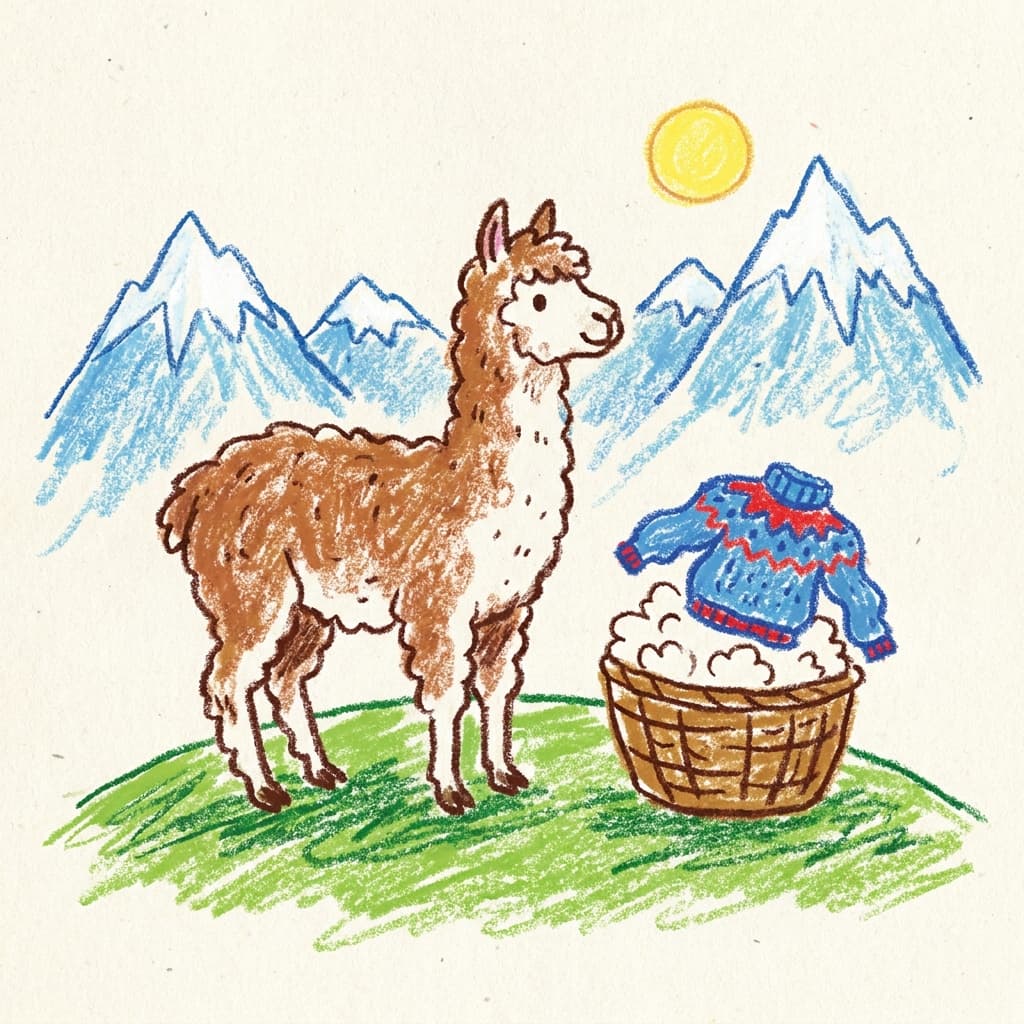
Drawn, not photographed. We have never been there.
Peru
Lima and Arequipa
nothing
Charged at the border
- The fibre
- Alpaca. It is sheared off an alpaca, the way wool is sheared off a sheep. The good stuff is called baby alpaca, and it does not mean a baby animal. It means the finest fibre off the fleece, between nineteen and twenty two microns thick. A micron is a thousandth of a millimetre, so twenty of them side by side would still be thinner than the thinnest line you can draw.
- Why that number
- The United States and Peru signed an agreement, so the rate is nothing instead of sixteen percent. There is a catch, and it is called yarn forward: the yarn itself has to be spun in Peru or in America. Buy the yarn somewhere else and only knit it in Peru, and the nothing turns back into sixteen percent.
Where it stands. A workshop in Lima has our knitting chart and is talking to its knitters about it. No price yet either.
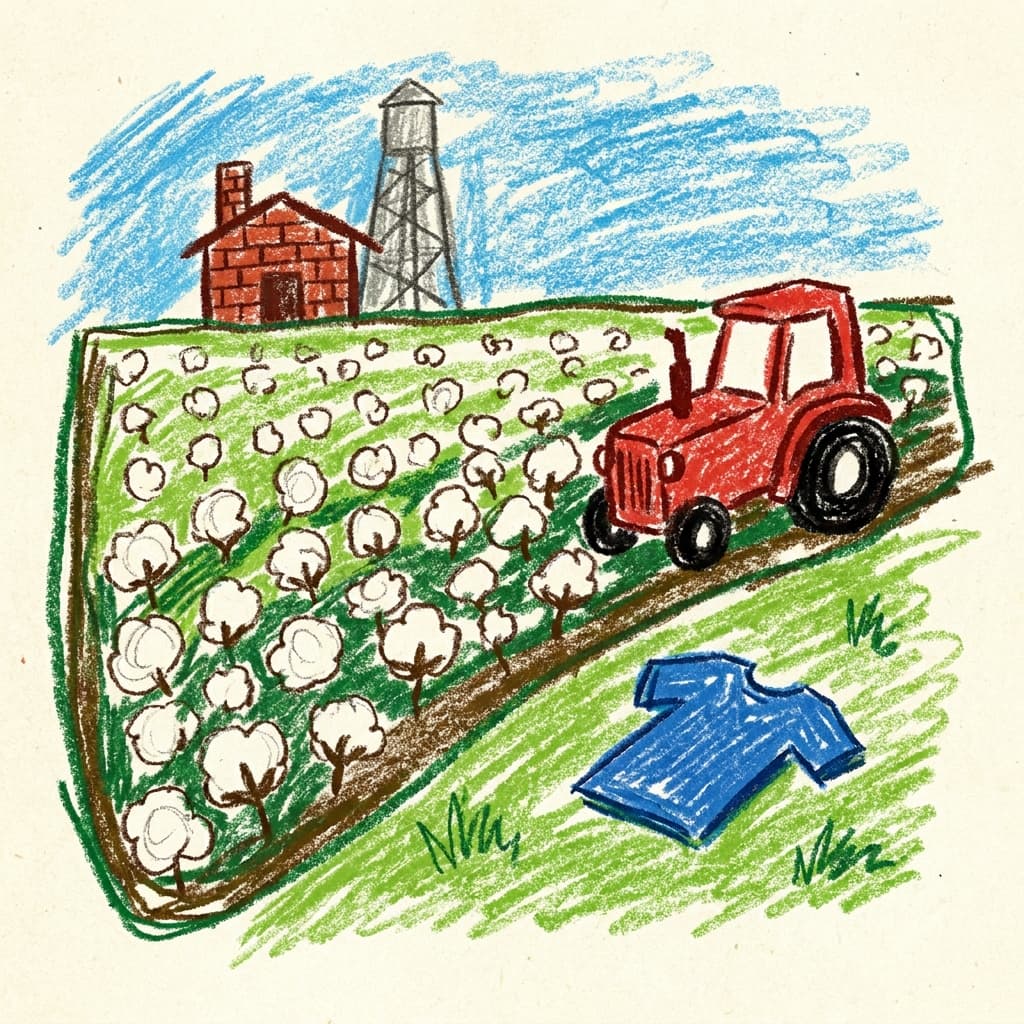
Drawn, not photographed. We have never been there.
North Carolina
Burlington and Asheville
nothing
Charged at the border
- The fibre
- Cotton again. This time it grows right there, in the field by the mill. One of the two shops we are talking to runs a programme where the cotton is grown, cleaned, spun, knitted, dyed, cut and sewn without ever travelling more than seven hundred and sixty eight miles. They put a code in the neck label so you can look up the actual farm it grew on.
- Why that number
- Nothing crosses a border, so there is nobody at a border to charge anything. This is the boring reason, and it is the only one of the three that can never change.
Where it stands. This is the only lane that has actually given us a price. Both shops have, which is why the tee is the thing most likely to exist first.
Distance is not the answer.
Portugal and Peru are the same distance from us. Not roughly. Measured across the globe from our own front door, they land within sixty miles of each other, and one of them costs nearly a fifth extra to bring in while the other costs nothing.
Portugal
3,900 miles away
19.7% charged at the border
Peru
3,900 miles away
nothing charged at the border
North Carolina
690 miles away
nothing charged at the border
The two nothings are not the same nothing either. North Carolina is nothing because there is no border to cross. Peru is nothing because two countries sat down and agreed it would be, and they can un-agree it, and they have changed the rules three times in the last twelve months. One of those nothings is permanent and one of them is a promise.
These are our live lanes, not an example. The rates come off the tariff schedule under the headings each garment actually ships on, and we ask every maker which line they would ship under rather than taking a delivered price on trust, because an optimistic delivered price moves the surprise to the border. Two of the three lanes still owe us a quote. The one that has quoted is the one that never crosses a border, which is not a coincidence.
That is the end of this one
The word for what you just did is duty.
Duty is money a country charges you for bringing a thing in over its border. Every kind of thing has its own number and its own code, and two countries can agree to make it nothing. It is decided by which door you come through, never by how far you came.
Where to go now